
Blog
Is Reindeer Moss Sustainable?
Why most moss walls are a poor choice for office design.
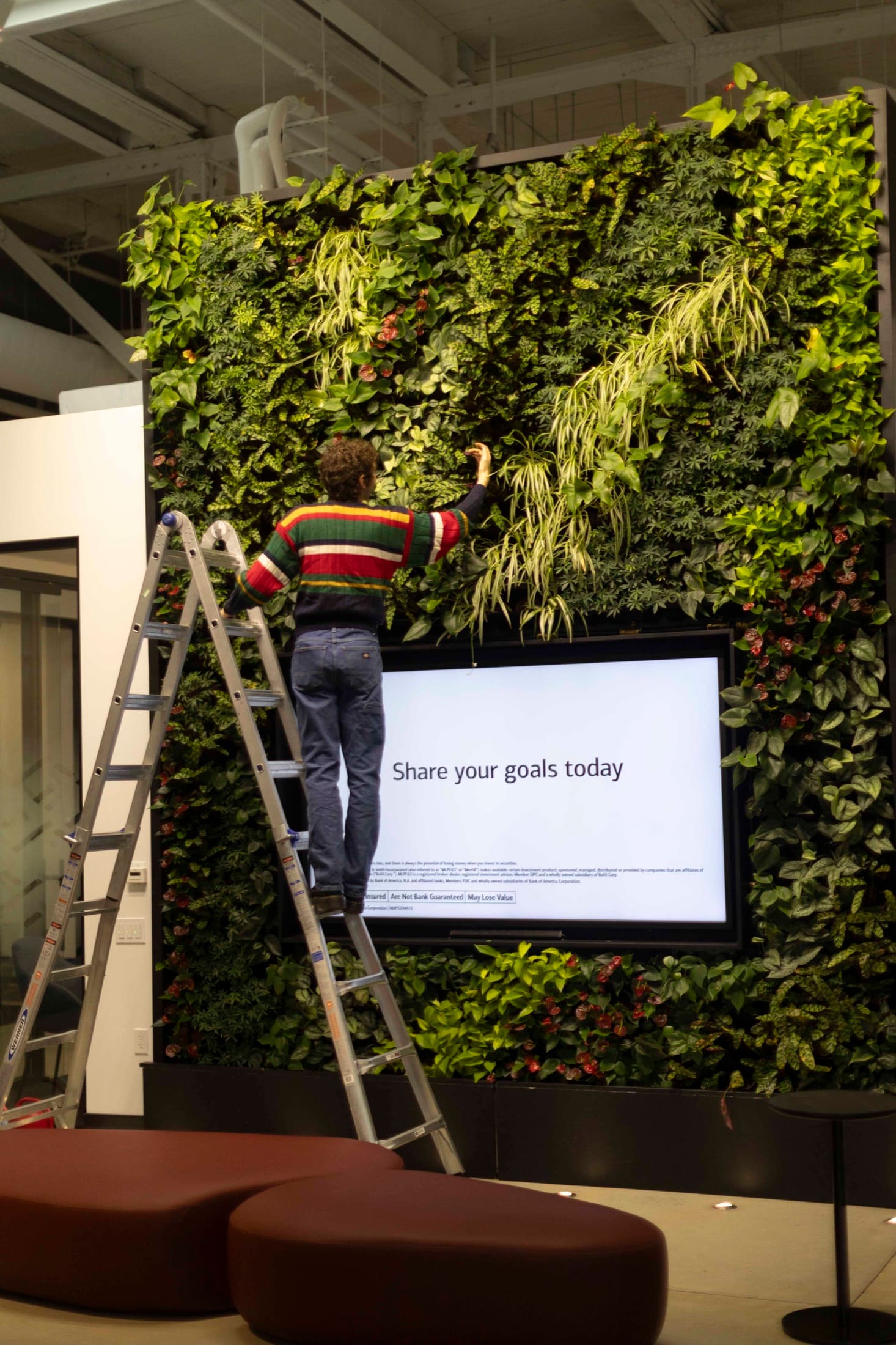
Biophilic design has transformed modern spaces, bringing natural textures, greenery, and grounding energy into concrete offices and commercial buildings. When seeking low-maintenance greenery, architects and interior designers frequently turn to preserved "reindeer moss."
It looks soft, comes in vibrant colors, and promises zero maintenance. But looking past the marketing reveals that reindeer moss is a poor choice for both your indoor environment and the planet — and a missed opportunity to harness the genuine human wellness benefits that only live plants can deliver.
It Isn't Moss — It's a Slow-Growing Lichen
Despite its common name, reindeer moss (Cladonia rangiferina) is actually a lichen — a symbiotic organism made of fungi and algae. Unlike true mosses, lichens have no roots and grow exceptionally slowly, often only 3 to 11 millimeters per year.
Because it grows so slowly, it can't be farmed commercially like a traditional crop. Every piece of reindeer moss used in an acoustic panel or wall installation was removed from a wild, natural ecosystem.
Wild Harvesting Destroys Fragile Ecosystems
To supply the demands of interior design, reindeer moss is harvested en masse from boreal forests and arctic tundra regions, particularly in Scandinavia and Northern Canada. In these subarctic environments, lichen plays a vital ecological role:
- Ecosystem foundation: it acts as a primary ground cover that prevents soil erosion, retains moisture, and provides micro-habitats for insects and microorganisms.
- Vital food source: it's the primary winter food source for wild reindeer and caribou. Stripping large swaths of ground lichen starves local wildlife and disrupts fragile food webs.
Because regrowth takes decades, heavy harvesting strips these slow-recovery ecosystems bare, leaving long-lasting ecological damage behind.
Commercial Interiors Destroy Preserved Lichen
Preserved reindeer moss is sold as a zero-maintenance product, but it relies on ambient humidity to stay pliable. In dry indoor environments — especially air-conditioned offices and heated commercial spaces — ambient humidity frequently drops below 40%. When humidity drops, preserved lichen undergoes a drastic shift:
- Brittle & shedding: the lichen dries out, loses its flexibility, and turns brittle. Touching it or brushing past it causes it to crumble and shed onto floors and furniture.
- Air quality hazards: as the dried lichen crumbles, fine dust and particulate matter are released into the air, degrading indoor air quality and creating allergen hazards for building occupants.
- Fading & waste: preserved moss is heavily dyed using synthetic chemicals and salts. As it deteriorates, colors fade, leaving unsightly patches that lead to complete tear-outs and landfill waste.
Preserved Plants Offer Zero Living Wellness Benefits
Preserved moss walls and static biomorphic decor are non-living materials. While they mimic green shapes, they miss the core mechanism of biophilia: connecting humans to active, living nature. Live plants stand far above preserved options as the ultimate biophilic solution because of their direct impact on human health and workplace performance:
- Active indoor air purification: live plants actively transpire, increasing healthy indoor humidity while pulling volatile organic compounds, carbon dioxide, and airborne particulate matter out of the air. Preserved moss does none of this — and, as it breaks down, degrades air quality instead.
- Measurable stress and cortisol reduction: interacting with and simply being in the presence of living plants lowers blood pressure, reduces autonomic nervous system stress, and decreases salivary cortisol levels far more effectively than static, preserved replicas.
- Cognitive performance and mood enhancement: studies consistently show that live indoor foliage boosts focus, enhances creative problem-solving, and decreases physical symptoms of fatigue and headaches among office workers.
- The dynamic human connection: true biophilia responds to the dynamic, living world. Live plants grow, unfurl new leaves, change with the seasons, and respond to light. This subtle, living movement fosters a psychological connection to the natural world that static, preserved panels simply can't replicate.
The Verdict
Choose living design over preserved products
Biophilic design is rooted in fostering an authentic connection between humans and living ecosystems. Harvesting slow-growing wild lichens to create short-lived, static interior decor undermines both environmental ethics and the primary goal of biophilia: occupant wellness. Whether using living wall systems with automated irrigation, integrated plant cabinetry, or potted floor specimens, live plants will always be the superior choice — they invest directly in human well-being, improve the environment inside your building, and respect the natural environment outside it.
Ready to design with living plants instead?
From living green walls to full interior plantscaping, our team designs, installs, and maintains real biophilic solutions built to last.
Work with us
Get in touch
Ready to bring the natural world into your space? Whether you need office plants, a living green wall, or a rooftop garden in New York City, Chicago, or Washington D.C. — we'd love to hear about your project.