
Blog
Fungus Gnats in the Office?
Why workplace plant pests happen — and how professional maintenance makes them disappear before anyone files a ticket.
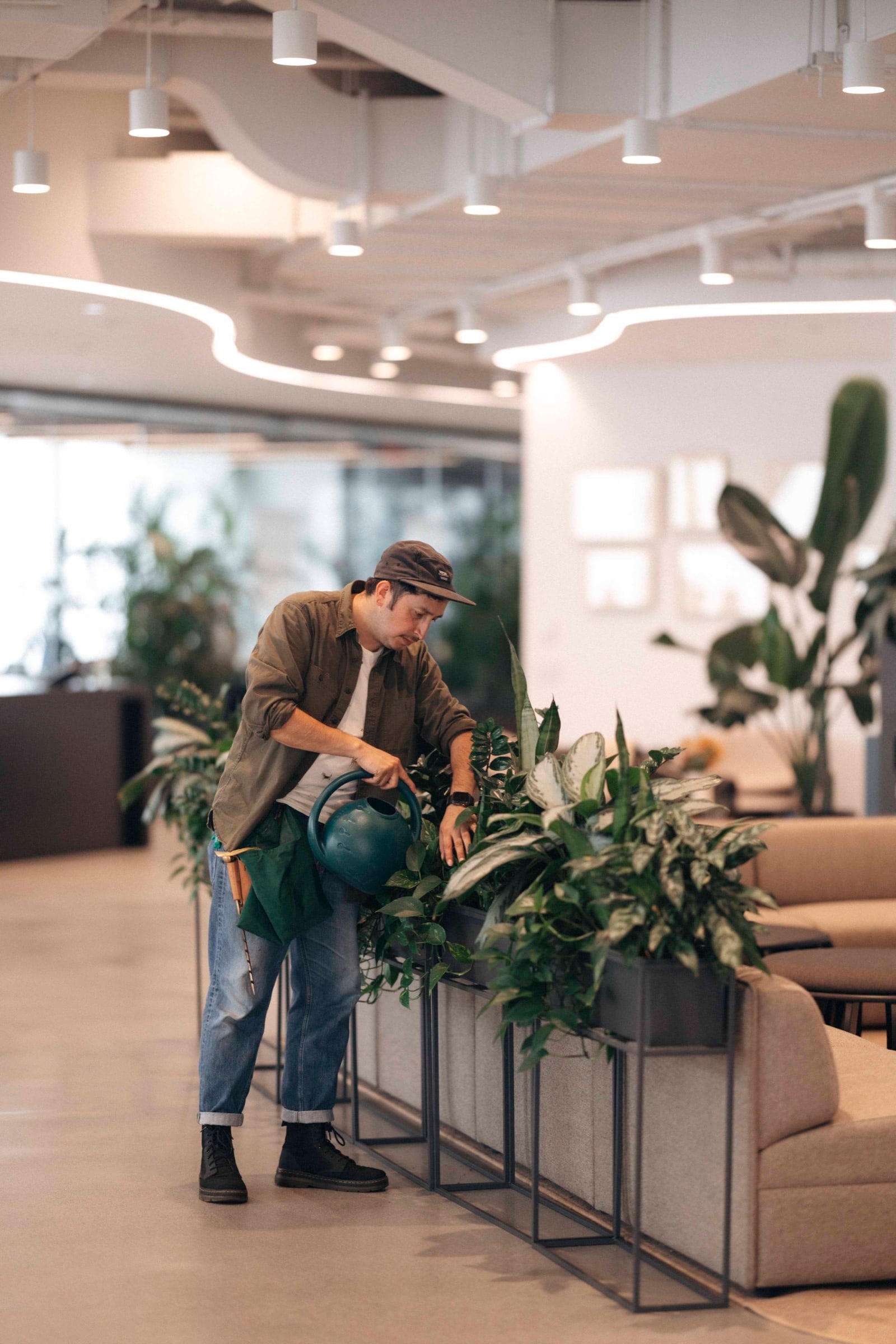
Pests are an inevitable part of bringing living foliage into an indoor environment. Whether your office features a single boardroom ficus or an expansive under-stair planter, encountering the occasional pest isn’t a sign of poor facility hygiene or improper plant care. It simply means you’ve integrated a living ecosystem into your workplace.
A common scenario for facility and office managers goes like this. You invest in beautiful, pristine interior landscaping to elevate your office environment. Weeks later, during a team meeting or while working at a desk, someone notices a tiny gnat buzzing around a coffee cup or a monitor. The immediate impulse is concern or frustration: where are these coming from, is the building dirty, and why is this distracting me from my work?
The truth is that fungus gnats and indoor plant pests happen in every indoor environment. With professional care they are completely and quickly treatable, and they don’t have to be a headache for your team.
Why fungus gnats love indoor spaces
Fungus gnats — from the Mycetophilidae and Sciaridae insect families — are by far the most common pest found in commercial plantscapes. Adult fungus gnats don’t bite people, feed on humans, or carry diseases, but their presence is certainly an annoying distraction in a professional setting.
It’s all in the soil. Fungus gnats feed on microscopic fungi and organic matter present in any healthy soil medium. Female gnats lay eggs in the top layers of moist potting mix, where the larvae feed before emerging as flying adults.
Modern office ventilation and lighting. Commercial spaces offer steady temperatures, warm lighting, and consistent airflow — ideal conditions for adult gnats to thrive once they hatch.
Easy travellers. Because juvenile gnats are virtually microscopic, they pass undetected from nurseries into commercial buildings. They can also slip through open doors and window screens, or hitch a ride into the building on clothing during warmer months.
Out of sight, out of mind
Fungus gnats are pervasive precisely because they spend most of their lives hidden. By the time one is flying past a monitor, the next generation is already in the soil.
01
3 days
Eggs laid in the top layer of moist potting mix hatch into larvae.
02
2 weeks
Larvae feed unseen beneath the soil surface, where nobody is looking.
03
1 week
Adults emerge, fly, and live just long enough to lay the next generation.
While minor infestations are harmless to the plant, heavy larval populations can eventually damage root systems and stunt growth if left unmanaged.
It’s an annoying reality, but a completely normal one — nature reminding us that living design cannot be fully isolated from the natural world.
Why professional prevention and maintenance matter
In wild tropical environments, where most office plants originate, rain, wind, dry spells, and natural soil predators keep gnat populations in check. Inside an air-conditioned, temperature-controlled office, those controls don’t exist. Without a balanced outdoor ecosystem, indoor plants rely on human intervention to manage soil ecology.
In recent years the interior plant industry has seen a higher likelihood of minor pest flare-ups. This is actually a positive step forward for the environment: many harsh, persistent systemic chemicals previously used to sterilise soil have been strictly regulated because of their impact on global bee populations and broader ecosystems.
At Greenery NYC we support these standards. We don’t believe in drenching office plants in toxic synthetic pesticides to achieve temporary sterility. Instead we rely on managed ecological balance, using several methods together.
1. Attacking the full lifecycle
To eliminate fungus gnats, the larvae in the soil and the adult flies have to be targeted at the same time. Dealing only with adult flies won’t stop hidden eggs from hatching, and treating the soil alone won’t stop adults from laying new ones.
2. Targeted moisture and soil management
Fungus gnat larvae require constant moisture. Professional plant technicians manage precise watering cycles, letting topsoil dry out enough to disrupt the egg-laying environment without stressing the plant. In specific cases, a top layer of porous mineral aggregate — bonsai-grade pumice, for instance — creates a physical barrier that keeps adults away from the damp soil below.
3. Biological and eco-friendly controls
We use biological insecticides like Bacillus thuringiensis subsp. israelensis (Bti), a naturally occurring soil bacterium that targets gnat larvae below the surface while remaining entirely safe for people, pets, and indoor air quality. Yellow sticky indicators and targeted contact sprays work alongside it to capture adult flies.
4. Advanced substrates and sub-irrigation
In particularly sensitive environments — healthcare facilities, research labs, dining areas — we often use sub-irrigated planters or custom inorganic substrates. Sub-irrigation delivers water directly to the root system from a bottom reservoir, keeping the top layer of soil completely dry. Remove the moist surface and you remove the breeding habitat entirely.
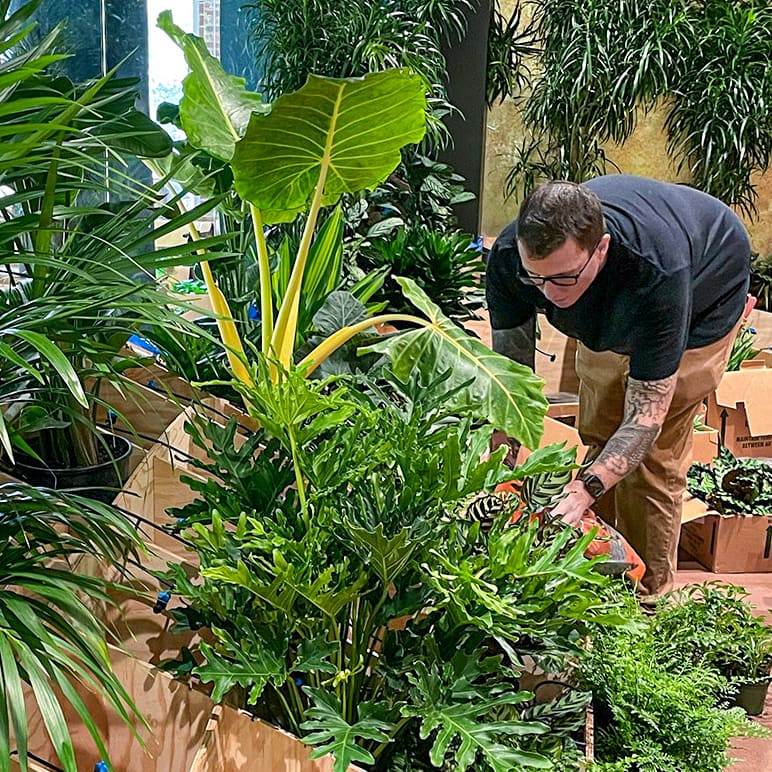
Partnering for a seamless green space
Sustaining healthy botanical elements in commercial settings takes specialised expertise, time, and consistency. Left unmanaged, plant pests can cause a flood of tickets for facility teams. With a dedicated maintenance team, soil health and pest control become a background process that stops issues before they start.
A facility management team shouldn’t have to spend valuable time troubleshooting soil biology or fielding complaints about stray insects. Incorporating nature into your workspace should elevate your office culture, not add to your task list.
Done properly, pest management is invisible to your staff — leaving vibrant, healthy plants and nobody wondering where the gnats came from.
Let someone else worry about the soil biology
Our horticulturists visit weekly or bi-weekly, managing watering cycles, soil health, and pest control so your team never has to think about it.
Work with us
Get in touch
Ready to bring the natural world into your space? Whether you need office plants, a living green wall, or a rooftop garden in New York City, Chicago, or Washington D.C. — we'd love to hear about your project.